
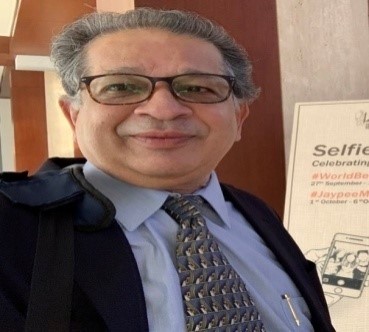
Dr. Sunil Shroff is a distinguished medical professional with over four decades of experience in urology, renal transplantation, and healthcare innovation. Renowned for his pioneering contributions to organ donation advocacy and digital health, he has successfully performed more than 30,000 urological and kidney transplant procedures, including several ground-breaking surgeries.
As the founder of MOHAN Foundation and a leader in national and international medical societies, Dr. Shroff has played a pivotal role in advancing organ donation programs in India. He is a respected educator, speaker, researcher, and a prolific author and editor.
He currently serves as President of the Telemedicine Society of India and is the Past President of the Indian Society of Organ Transplantation, the Nephrology, Urology & Transplantation Society of the South Asian Association for Regional Cooperation (SAARC), and the Madras Urological Society. He is the Asia Councillor for the International Society of Organ Donation and Procurement and the Commonwealth Tribute to Life Project.
Dr. Shroff is also an Advisor and Board Representative to the Transplant Authority of Tamil Nadu, the HTIC MedTech Incubator at IIT Madras, and the Sri Ramachandra Innovation Incubation Centre (SRIIC), Chennai. He serves on the Advisory Council of Doctor’s AI.
He is the Chief Editor of the Indian Transplant Newsletter and the Digital Health Newsletter of the Telemedicine Society of India, and serves on the Editorial Advisory Board of the Indian Journal of Transplantation. Dr. Shroff has edited and authored five textbooks and 16 book chapters, and has over 850 publications, including scientific papers, newspaper articles, web publications, and blogs. He has received numerous accolades for his social impact and professional excellence.

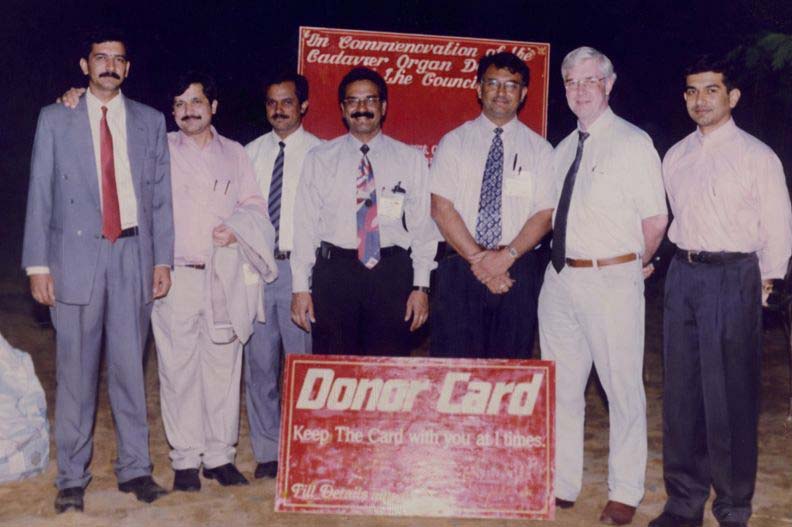
Media Recognition

KBC Karamveer (2020)
Featured with Amitabh Bachchan for organ donation awareness